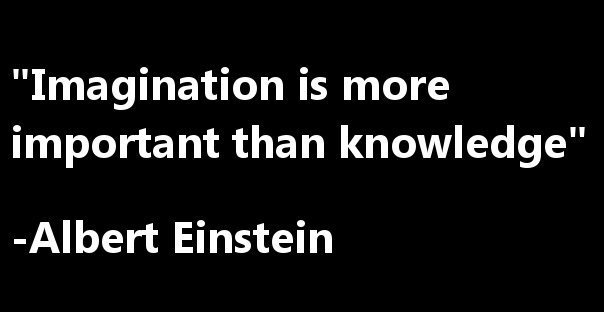
Infinite Possibilities/One Idea

Albert Einstein

If you’re reading this blog, you’ve probably noticed that it is attached to a website, and that the website is a collection of articles.  I know what you’re thinking.  Why would a website that is a collection of articles need a blog?  Why would anyone read the articles instead of the blog, or read the blog instead of the articles??  What are you trying to do here???  Why do you need so many question marks????  Well you deserve an explanation—so here it is.

In the 21st century, I believe the development of learning platforms and grids that help enable people to find any source of knowledge or skill and to connect with each other through learning paradigms is inevitable.  Furthermore, I believe that a unique focus on social learning solutions will eventually help to redefine the global education industry, the 2nd largest industry in the world.  The new technology-based social paradigm will appeal to the primary and supplemental needs of not just traditional teachers and learners, but to all people who seek assistance for knowledge and training in any situation to achieve their personal or professional goals.

For these purposes, the word “teacher” will mean not only instructors in classroom settings or with credentials of all levels and experience, but also “tutors,” “coaches,” and any individual with a skill, knowledge or training that they have acquired and would like to impart.  With the progression of technology that connects us all and increased access, I believe the ultimate scope and potential of this user base will continue to grow indefinitely.

The vision of LRNGO is to create a “learning market,” a wide open social learning space on the internet that allows any potential user to find another who can teach them anything they desire to learn.  Not just online, but face to face in the real world.  Education (meaning not just research learning or “teaching yourself,” but learning from others) will no longer be confined to learning in groups, classrooms, or institutions, from which many are excluded.  Anyone can find a source to learn anything they want or need at any time that is desirable, at any age or stage in their lives, wherever they are, and where cost may no longer be an issue.

This idea is based on two premises. First, that at any given time in a person’s life, there is a skill that he or she would like to develop or improve upon, as well as knowledge that he or she has that can be taught.  Second, as individuals increasingly see opportunities through new business models, individuals in both learning and teaching roles (teachers and students) will start thinking about learning in terms of transactions and realize that knowledge is a commodity, and “everything is negotiable.”

The move to social learning space can be expedited in part by a geographically searchable “mega-directory” website of all individuals who wish to be included, showing their skills and all level and knowledge of subjects that is completely open to the public, but is NOT limited to online learning.  The learning space will be a “marketplace” that is divided into 3 basic tiers, and each of the 3 tiers can be seen as a time/cost trade-off.

At the top tier, there would be an optional service for those who don’t have time to find someone to teach what they need, but prefer to spend money to hire someone or a trusted brand/entity to facilitate the entire process for them to take care of any learning needs they may have.   They can pay a concierge service or person to help make the right match with the right teacher at the right time and place of their choosing, and schedule any education or instruction program around their own valuable time.  (Of course, there are many services already doing this, and it’s not irrelevant that the global private tutoring market is projected by GIA to exceed $100 billion in the next five years.)

The middle tier is a listing of everyone in the world who wants to teach what they know.  Everyone is free to publicly browse and search this directory, and users will be quickly and conveniently searchable both by subject and location.  Users will create a public profile listing with as much or as little information as they are comfortable with showing, and will be able to be contacted directly through or outside of the website (they can choose whether anonymously or not).

Finally, where money is less of an option, there is a barter or trade system.  For those who don’t want to spend or don’t have money (such as college students), the idea is to “trade” an expertise of theirs in exchange for help or instruction in another subject.  This can be thought of loosely as a time bank barter system.

Revenue can be generated through…ah what the heck–let’s make it free.  🙂

In the next two years, the social learning market will be at the forefront of a new systemic movement toward open education.  Stick around.  This caterpillar website is about to turn into a butterfly.

(Supporting documents: “Connectivism: A Learning Theory for the Digital Age” by George Siemens, Hacking Education Conference Transcript 3/6/2009, “Google U” by Jeff Jarvis, “DIY U: Edupunks, Edupreneurs, and the Coming Transformation of Higher Education” by Anya Kamenetz)

Knowledge is a Commodity

So I started thinking about how to explain what brought me to the conclusion that knowledge is a commodity and how LRNGO.com was going to implement a platform for this, and I realized that it has actually been a common theme throughout my life.  Of course, the purpose of this blog is not to bore you with my life story, but…well, too bad I’m going to bore you with my life story.  🙂

It all started with music. Like a lot of kids, I gravitated towards what I was good at.  In my case, when I was growing up and heard songs I liked on the radio, I could usually play & sing them by hearing them.  It was just something I did and enjoyed without very much difficulty.  When I “learned,” it was because I was either learning through private instruction, or performing with others who were older and better than me.  Research was practicing, learning from an instructor was training, but playing for and with others actually “doing it” was social and learning at the same time.  That’s what provided the benchmarks, as well as the impetus for me to research and train harder.

This early experience eventually led me to write a thesis called “All the World is a Stage: the Dynamics of One on One Training vs Group Immersion.”  The idea is that you train more intensely one on one so you can interact at a higher level when you are in a social group, and the larger the group (or “stage” so to speak – expandable up to the whole world), the more competition, and therefore the more intensely you train.  I hypothesized that one could apply this to all forms of learning; everything from the Olympics to languages (ie: if you are in France, you will not only learn French quicker because you are there “doing it,” but also because you will try harder to learn when you are training).

Whether or not the idea that effort or assimilation is directly proportionate to competition and size of a group is flawed, what I found interesting was the extent to which these dynamics feed off of each other and how they are inter-related, and the percentages of learning that take place in social group or immersion settings vs one on one training vs research/practice.  At the time though, I didn’t acknowledge the extent to which one on one learning is also social–which brings me back to…that’s right, my boring life story.  🙂  (Stay with me here, it will all make sense.)

I earned money to go to college by gigging in professional bands the summer before and the summer after my first year of college.  Without getting into how much I learned performing vs how much I learned in school (almost equal but very different), at that time, I chose to continue to play professionally rather than complete my degree.  However, a few years later as a professional, I found myself having to compete with better players on larger stages, and felt like I would have also greatly benefited from a strong university program.  Unfortunately, the choices at that point weren’t good for a working musician.  To stop working full-time and go into debt for school was not a viable option on a musician’s salary.

Looking back now, the situation reminds me of a story I heard.  There was this guy who wanted to go to MIT (skip ahead if you’ve heard this one before) but couldn’t get in and didn’t have the money.  He borrowed a small amount to attend a nearby Art Institute and learned how to create a very realistic school ID.  He used his skills to manufacture one for MIT and attended their classes, and although he never got credentials on paper, once he started working in the real world no one cared.  He took his studies seriously, and became a good enough software engineer that he always had work.  He had no money, learned, and ultimately beat the system.  (I wouldn’t have tried this myself, because with my luck I would have just ended up in the slammer owing a lot of money to MIT!)

So I didn’t plan anything near as devious, but I did contact the professor at my target university who was the head of the department directly.  I explained the situation to see if he would teach me privately, and he did.  I learned the curriculum directly from him (a credit to both his goodwill and teaching ability), and reaped the benefits in less than one third the time at a small fraction of the cost.  What I didn’t realize at the time, was that I had also accidentally learned how to teach the curriculum that he taught me.  I found this out later, and then began teaching what I knew to others through private lessons.

From that experience, the questions eventually started pouring into my head.  How closely are learning something and learning how to teach it related?  Was it just me, or can anyone transfer one to the other? (Still an ongoing question BTW.)  If I learn “how to teach”, can I then teach anything I learn?  For me it stood to reason the answer was yes, but I wanted to find out.  I did, and eventually became a full-time instructor.

At one point I may have gone a bit far in my experiments, and I began teaching in classrooms when I had little (ok no) credentials for this.  I did know the subject, but had no classroom experience or training, so I decided to do some preliminary consulting with the best classroom teachers I could find to learn a thing or two before going in.  After a couple weeks, I quickly found a job where they had been through three teachers in the past 18 months (it turned out none of them could keep the class engaged – baptism by fire!), and I just started “doing it.”  Sure I made mistakes in the beginning, but I made sure to document everything and keep track of what was working and why.  In the end, I turned out to be the first teacher for that subject and in that school location they had ever considered successful, and I continued at the school for two years.

As another side note (can I do that?  Where is the blog handbook…): I have to say IMHO other than knowing the subject matter, a short stint in comedy turned out to be the best training possible for me as an uninitiated teacher going into a first time classroom setting.  Not to entertain or even to keep attention of the class, but because it constantly makes one hyper-sensitive to gauging audience reaction and instantly knowing if they are “with you” and “getting” what you’re saying.  In comedy, if the audience doesn’t understand or “get” something, seconds seem like hours, so you learn to redirect them and communicate very quickly in a different way that makes you understood or else you “die.”  If I had one bit of out of the box thinking advice to universities, I would encourage experimenting with limited standup comedy training in education curriculums and then measuring results.  (I’d be very interested to know if anyone is actually out there doing that!)

Anyway, all that is to say, my own private instruction experiences ultimately weren’t just social because I was interacting with another person when learning, but because there was also a paying it forward aspect from teaching others in turn.

And so it went: from martial arts to business accounting to running a record label, I always felt like given time and money limitations, I got more bang for my buck by just doing things and paying an expert of my choosing to teach me how.  This, in turn, also helped the individual instructor to supplement their income at a time and location that was convenient for them, and eventually enabled me to pass on to others what I had learned in the new role of instructor.  No, it shouldn’t be the only way—but it should be a choice everyone has—whether used to supplement their classroom experience, or to learn a new skill on the side.  It is the future, and the future of education will be about choices.

Why Learning Is Social

Hi, my name is David C. Brake/Founder of LRNGO.com, a startup company and website in development that I began with my co-founder, Mandy Liu Brake. Before I write anything else, I want to thank everyone who responded to our call to contribute original articles to the site.  Many of them are very informative, and I can’t tell you how much we appreciate your ideas and wisdom – especially when it can’t be found elsewhere on the web!

So let’s cut to the chase—I imagine you want to know what the heck this website is all about and why you would want to read this blog.  🙂  Perhaps they are both trick questions.  To answer the first, right now LRNGO.com is simply an article library, but it is actually a website in development that we refer to as the “world’s first knowledge market,” and you would want to read this blog and keep up with the development of LRNGO.com if you are interested in learning anything from others locally or making money teaching what you know.

The story?  Well, we began this project because I am completely crazy.  You see, I own a company called Teachers 2 Go LLC whose mission is to provide busy people with any type of instruction by bringing teachers to their home through a convenient concierge service.  Because of this and my own prior teaching and learning experiences, I became interested in all kinds of learning processes and methods—particularly those that could be called social or “alternative.”  Why?  Because I am a product of it and because there is an underlying economy that is driven by it, and because these facts have enabled me and others like me not only to survive, but to thrive in a system from which we might otherwise have been excluded.

When I say excluded, lucky for me, in my case I mean due to my own choices.  I have had my share of both good and bad experiences with traditional learning institutions, and I believe the classroom learning experience can be as essential in certain applications as alternative methods are in others.  However the fact remains, we don’t always have the time or money to go to school and get credentials in everything we want to know, or that we need to know in order to compete.

And yet we find a way to learn.  First we research and study, then perhaps we learn by practicing ourselves, and then we take it as far as we can until we hit a roadblock—and that’s when it’s time to get social.  Of course, the learning process takes on a whole different dynamic once you find someone to teach and guide you; whether it’s a friend who knows more than you, or a teacher or a mentor. Let’s face it, if this wasn’t the case, education wouldn’t be the 2nd largest industry in the world.

It’s no coincidence that in almost every story ever written, the main character or hero has a friend or a guide that teaches them.  Learning from others is social, participatory, engaging, and the clearest path to actually successfully “doing it”—whatever “it” may be.  In fact, it is basic human nature to learn from others.  One could argue that every conversation we have with someone else is a learning experience.  (Even if all we learn is that we don’t want to talk to them again.  Speed daters may be especially suited to expertise on that topic!)

Anyway getting back to Teachers 2 Go LLC, so there I was with a regionally successful company of over 175 instructors for almost every academic and extra-curricular subject under the sun, and one day I was noticing the number of calls we had to turn away and it started to bother me.  Because the schedules didn’t match, because they couldn’t afford it, because they were too far away—etc.  These people all wanted to learn their subject of interest, but the same kinds of barriers that made traditional education impossible and brought them to Teachers 2 Go in the first place (time/cost/location) were still making it impossible to connect with instructors to help them achieve their goals.  We were going in circles—and for many people, not solving the problem.

So I did what I should have done a lot sooner:  I went back to the problem.  Let’s see, we don’t always have the time or money to go to school and get credentials in everything we want to know, or that we need to know to compete.  Wouldn’t it be great if you could instantly find someone near you to teach you anything?  Wouldn’t it be great if you could teach whatever you know to anyone near you who is looking?   Wouldn’t it help our economy if knowledge were an openly traded commodity?

Stay tuned.  It’s about to happen.  🙂

[sfp-like-box url=https://www.facebook.com/LRNGO width=200 height=200 colorscheme=light faces=false stream=false header=false local=en_US]